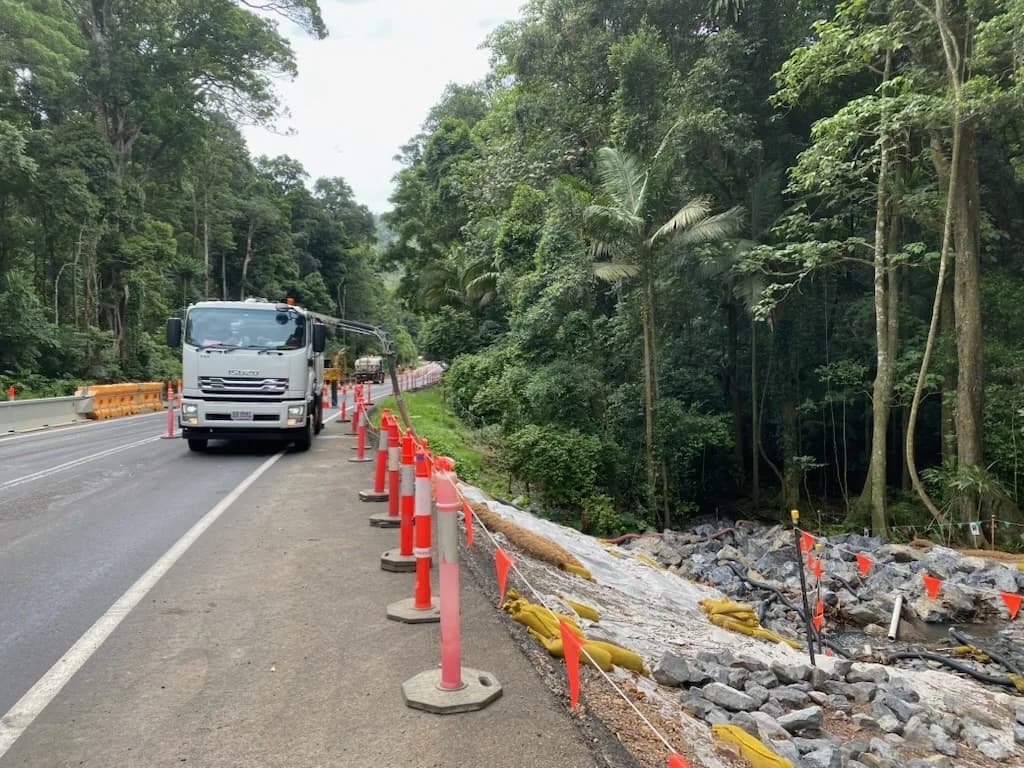
Roadside work zone with traffic cones, marker flags and an exposed rock batter

Ground Penetrating Radar

Ground Penetrating Radar in Brisbane, the Gold Coast & SEQ

Use ground penetrating radar where records and electromagnetic tracing leave gaps, on sites across Brisbane, the Gold Coast and South East Queensland.

24/7 response

Request a Quote

Send VACIT the site details, access notes and photos for your ground penetrating radar enquiry.

Send Job DetailsCall 0439 761 096

VACIT locating memberships and certification

  • National Utility Locating Contractors Association of Australia
  • CERTLOC

What radar adds to an investigation

Ground penetrating radar sends a pulse into the ground and reads what returns, so it can help investigate items that will not carry an electromagnetic signal. That can include non-conductive pipe, unrecorded assets, voids and changes in the ground itself. Results are interpreted, and radar does not detect everything that may be present.

Radar is used alongside the plans, the asset owner information and electromagnetic tracing rather than in place of them. It is generally brought in once those have been reviewed and there is still uncertainty across the work area.
The unit VACIT runs

VACIT operates an IDS GeoRadar Stream C, a 3D radar array built for underground utility investigation, alongside a dedicated locating vehicle and the vacuum excavation fleet. An array collects a wider swathe of data than a single-channel unit. What it can resolve on any given site depends on the conditions there, on how the survey is set up and on what is being looked for.

What affects how deep radar can see

Radar range is not a fixed number. It depends on the ground the signal travels through, on the equipment and antenna used, and on the size, depth and material of what is being looked for. Wet clay and conductive fill absorb the signal and shorten the range. Drier, coarser ground lets it travel further. A depth quoted before anyone has seen the site describes equipment, not your job.

Choosing between the methods

Electromagnetic locating suits services that will carry a signal and can be traced directly. Radar can help investigate items that will not. Neither method shows the asset itself, so where a service is critical, careful excavation can expose it and make its position visible at that point. Which methods suit a work area depends on what is expected there and what the work needs.

Radar work across Brisbane and the Gold Coast

VACIT runs radar investigations in Brisbane, the Gold Coast, Ipswich, Logan, the Sunshine Coast and the wider South East Queensland corridor, dispatched from the Mount Cotton operations yard. Send the site address, the area to be covered and the surface type so the survey and the site access are planned together.

Help us match the right setup

What to include with your quote request

  • Site address and the area to be covered
  • Surface type and ground conditions
  • Plans and asset owner information already held
  • The assets or features you are trying to investigate
  • What the results need to show for your next stage
  • Access, traffic control and site induction requirements
  • Whether excavation is expected to follow
  • Photos or a marked-up plan of the area
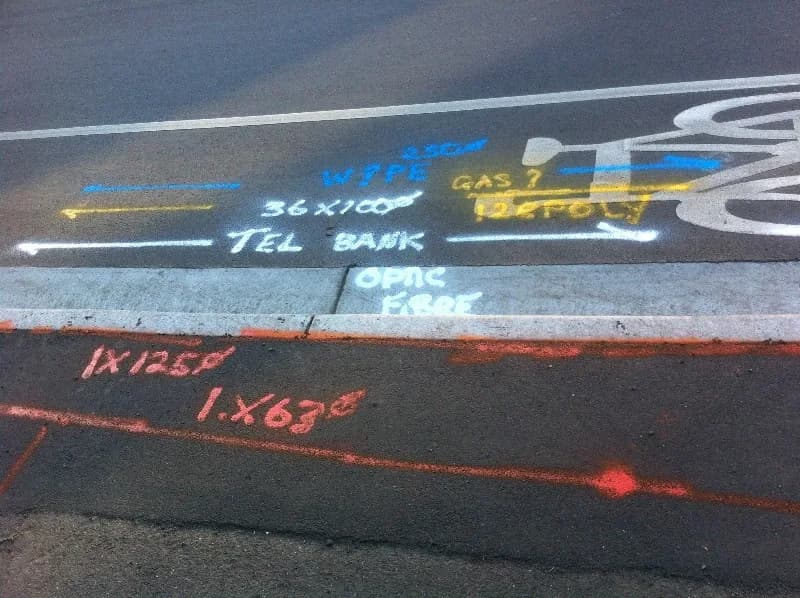
Painted utility markings and directional arrows across a road surface and kerb

Talk through the site first

Tell VACIT what is uncertain, and where.

Send the site address, the area to be covered, the surface type and what the plans already show. VACIT can confirm which investigation method suits the site and what the survey would involve.

Questions

Frequently Asked Questions

Call Now - 0439 761 096