Key takeaways
- Plans and electronic locating help identify where services may be, while potholing can provide physical confirmation at a specific point.
- Queensland rules require current underground essential-services information before excavation starts and require it to be provided to the people carrying out the work.
- Before You Dig Australia places potholing inside a five-part sequence: plan, prepare, pothole, protect, then proceed.
- The permitted method depends on the asset owner, site, service, and work controls.
- Good site information helps assess access, truck position, hose route, work area, and timing before arrival.
On this page
What is potholing for underground utilities?
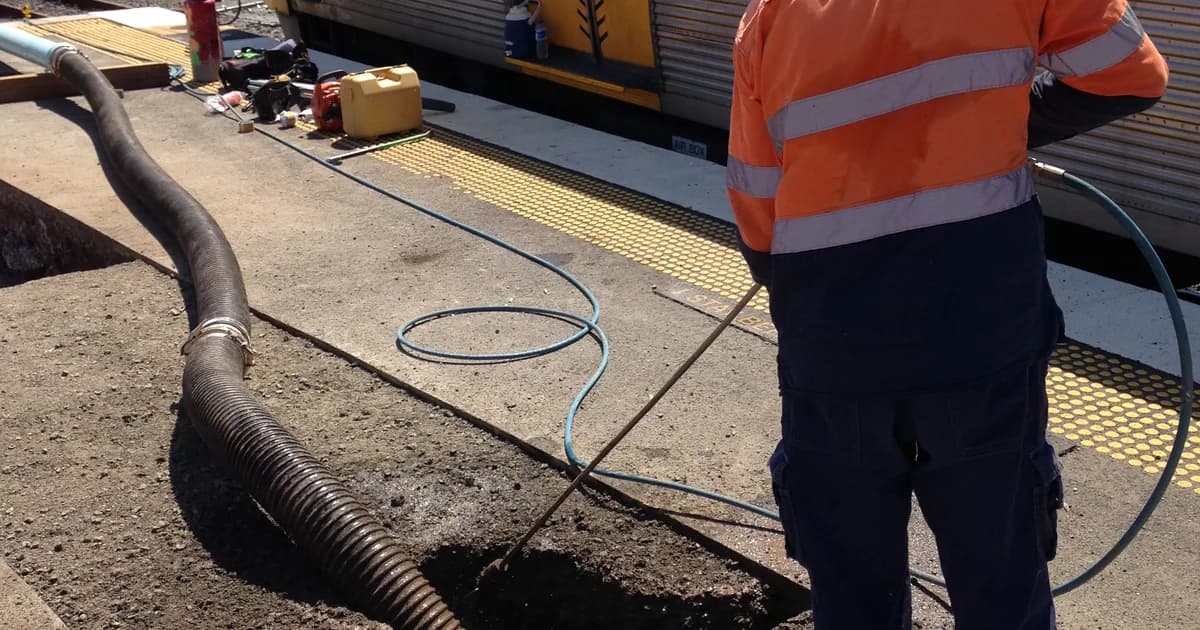
Potholing is the controlled exposure of a small section of ground to confirm the position of an underground service before broader excavation begins. Depending on the asset owner’s requirements and site controls, it may use hand digging or hydro vacuum extraction. The goal is visual confirmation, not an assumption based only on plans or surface markings.
In civil and construction work, potholing means making a small, controlled opening to expose and identify an underground asset. It is also called utility potholing, service proving, non-destructive digging, or vacuum potholing in some project documents. The terms are not always interchangeable, so the work scope should state the required outcome and method.
The Queensland Excavation Work Code of Practice 2021 explains that available underground-services information may not be exact. It describes initial examination by exposing a short section, often using water pressure and vacuum, and identifies potholing as a way to carefully confirm cable location when it cannot otherwise be determined. Retrieved 28 July 2026.
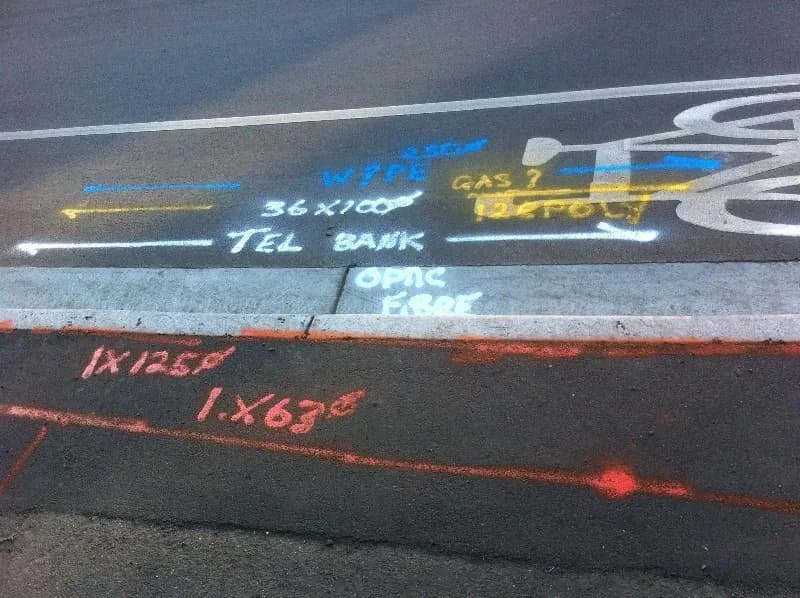
This distinction matters. A line on a plan, paint on the ground, or an electronic signal is valuable information, but it is not the same as seeing the service at the required verification point.
Where potholing fits before excavation in Queensland
Potholing is one part of excavation planning. It does not replace the duty holder’s wider obligations, site controls, consultation, permits, safe work method statements, or asset-owner requirements.
Section 304 of Queensland’s Work Health and Safety Regulation 2011 requires a person with management or control of a workplace to take reasonable steps to obtain current information about underground essential services before allowing excavation to start. The information must be provided to the people engaged to carry out the excavation and considered during the work. In-force version dated 7 April 2026; retrieved 28 July 2026.
Before You Dig Australia recommends lodging a free utility-plan request at least one business day before a project begins. It also warns that plans show assets in the vicinity rather than pinpointing every exact location, and that not every asset owner is a BYDA member. Retrieved 28 July 2026.
- Plan: lodge the enquiry early enough and obtain the available information.
- Prepare: review plans, contact asset owners, inspect the site, and use a skilled locator when appropriate.
- Pothole: verify the asset using the method permitted by the asset owner and stated in the information pack.
- Protect: communicate the exposed location and apply the required barriers, markings, or other controls.
- Proceed: begin the wider excavation only after the earlier steps and protective measures are in place.
The sequence is more useful than treating potholing as a stand-alone truck task. It connects the field work to the information, permissions, and controls that should already exist.
Plans, locating, potholing, and excavation are different steps
| Step | What it contributes | What it does not prove on its own |
|---|---|---|
| Asset plans and records | Known assets, owner instructions, and conditions | The exact position of every public or private asset |
| Visual inspection | Surface clues, access issues, and hazards | The exact depth and alignment of a buried service |
| Electronic locating or GPR | Subsurface investigation by a competent operator | Visual confirmation of the asset |
| Potholing | A controlled point for identification and checking | Permission to ignore asset-owner rules or wider controls |
| Broader excavation | The planned trench, bore, foundation, or civil work | That every unexposed area is free from other services |
The right sequence depends on the project. Service locating may help mark an alignment before selected potholes confirm it. Utility mapping may then record verified information for planning or project documentation. Neither should be described as a substitute for the controls required by the asset owner or workplace.
How hydro vacuum potholing works
Hydro vacuum potholing combines a water lance with vacuum recovery. The water loosens suitable soil within the controlled work area, and the vacuum hose removes the resulting material so the opening can be inspected. Equipment, pressure, excavation limits, exclusion zones, and reinstatement are job-specific.
The method is related to vacuum excavation, hydro excavation, and non-destructive digging. A work order should still define what needs exposure, how many verification points are required, which asset-owner conditions apply, and what happens after the service is found.
Potholing may be useful before trenching, directional drilling, boring, piling, saw cutting, sign installation, or other work that could interact with underground services. It may also be used when a plan and electronic locate do not give enough certainty for the next planned activity.
Hydro vacuum extraction is not always permitted. If the information pack prohibits a method, the asset cannot be located, field conditions differ from the plan, or the scope changes, pause while the responsible parties obtain direction.
What information helps plan a potholing job?
A clear enquiry allows the contractor to assess whether the requested work fits the service and what needs confirmation before scheduling.
| Information | Why it matters |
|---|---|
| Worksite location and site contact | Travel, access, induction, and coordination requirements |
| Current plans and BYDA information | Known assets, owner instructions, validity dates, and affected areas |
| Marked-up drawing or pothole schedule | The proposed verification points and the reason for each |
| Photos of the work area and access route | Truck position, hose route, overhead constraints, gates, and surfaces |
| Intended follow-on work | Whether the pothole supports trenching, boring, drilling, or construction |
| Known surface and ground conditions | Concrete, asphalt, landscaping, wet ground, or previous excavation |
| Site controls and timing | Inductions, permits, traffic controls, work windows, and other trades |
| Asset-owner instructions | Permitted methods, clearances, notifications, or supervision |
This information does not replace a site assessment. It gives the contractor a better starting point and makes gaps visible before the crew arrives.
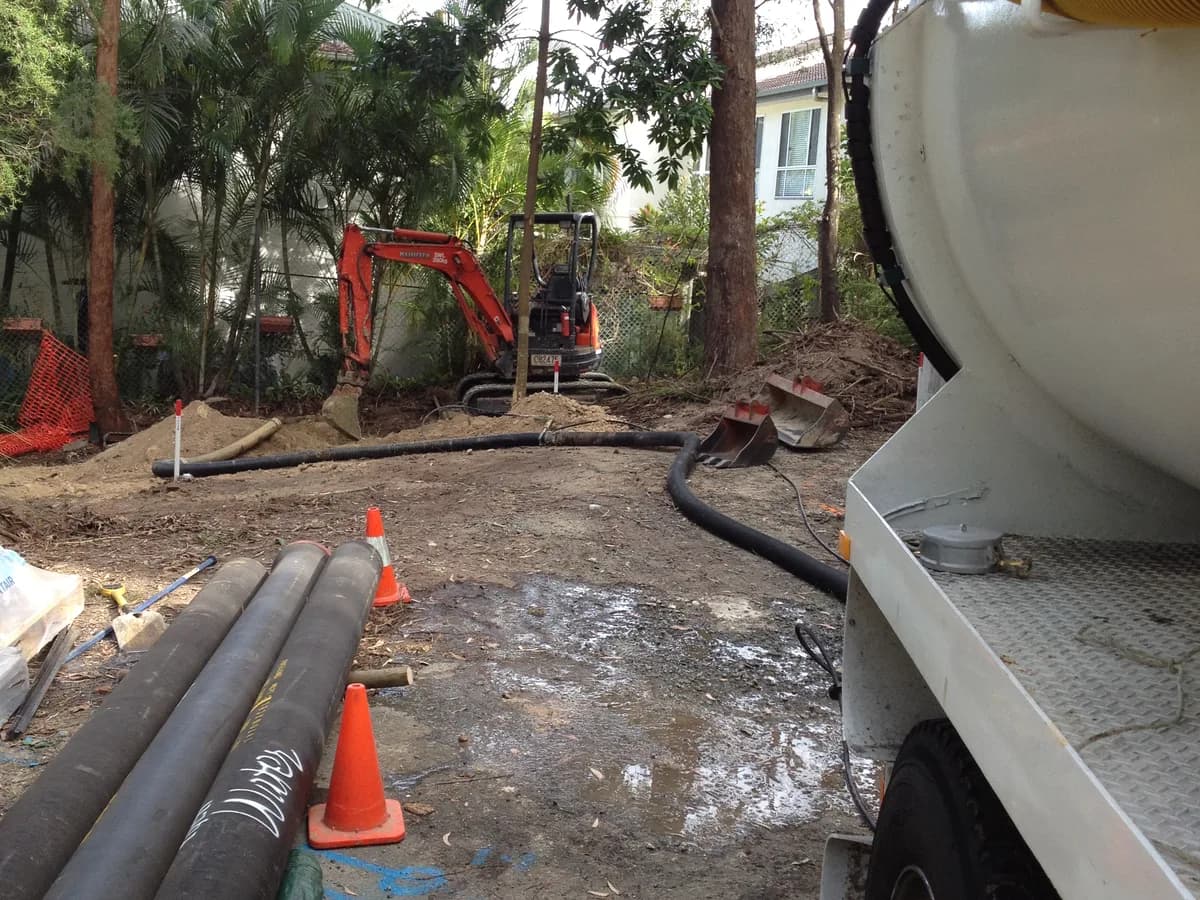
VACIT field note
The real VACIT field image above shows why access planning involves more than finding a place to park. The vacuum hose must reach the controlled opening, other plant may be operating nearby, and the work area needs enough room for the site controls. Photos and a marked-up plan help make those constraints visible before scheduling.
When the job should stop for more information
Potholing should not be treated as permission to continue under every condition. Stop and refer the issue to the responsible site or asset authority when:
- Plans are missing, expired, incomplete, or do not cover the work area.
- The asset owner has not specified or permitted the proposed method.
- Markings, signals, plans, and field conditions do not agree.
- An unexpected service or material is encountered.
- Access, traffic, ground, weather, or nearby work differs materially from the planned conditions.
- The scope, excavation limits, or verification points change.
- The required controls, permits, supervision, or competent people are not in place.
Safe Work Australia also notes that underground essential-services information should be available to workers, principal contractors, and subcontractors, kept for the required period, and readily available for inspection. Retrieved 28 July 2026.
Potholing questions contractors often ask
What is potholing in construction?
Potholing in construction is the controlled exposure of an underground asset at a selected point before broader work proceeds. It helps the project team compare physical field evidence with plans, markings, and locating results. The permitted method and next step depend on the asset owner, site controls, and planned excavation.
Is potholing the same as hydrovac excavation?
Not exactly. Potholing describes the verification task. Hydro vacuum excavation describes a method that can be used for the task when permitted. A hydrovac unit may also perform broader excavation or material-recovery work, so the scope should identify the required potholes rather than relying only on the equipment name.
Can BYDA plans show the exact position of every service?
No. BYDA states that plans indicate infrastructure in the project vicinity and should not be assumed to pinpoint every exact location. It also notes that not all asset owners are BYDA members. Plans are essential, but site inspection, locating, potholing, and asset-owner instructions may still be required.
What are the advantages of utility potholing?
Potholing can give the project team direct visual information about an asset at a specific verification point. That information can support planning for the next stage and expose conflicts between records and field conditions. It does not remove other excavation risks or replace the required controls.
What should I send when requesting potholing services?
Send the worksite location, current plans and asset-owner information, marked verification points, work-area photos, access constraints, intended follow-on work, site rules, timing, and site contact. Explain what the project needs to confirm so missing information can be identified before scheduling.
Plan the verification points before the truck arrives
A useful scope identifies the asset information already obtained, the exact points that need verification, the reason each point matters, and the work that follows. VACIT can then assess the relationship between service locating, potholing, vacuum excavation, and the wider site plan.
Read the related service-strike guide or request a quote with the plans, photos, access notes, and proposed verification points.
General information only
This article is not legal, engineering, locating, or work health and safety advice. Follow current legislation, the asset owner’s instructions, and the controls established by the people responsible for the workplace and excavation.
Sources reviewed
Queensland WorkSafe, Excavation Work Code of Practice 2021. Used for underground-services information, initial examination, water and vacuum potholing, and locator competency. Retrieved 28 July 2026.
Queensland Government, Work Health and Safety Regulation 2011, section 304. Used for the duty to obtain, provide, consider, retain, and make available current underground essential-services information. Retrieved 28 July 2026.
Before You Dig Australia, Best Practice Guides. Used for plan-request timing, plan limitations, asset-owner instructions, and the plan, prepare, pothole, protect, proceed sequence. Retrieved 28 July 2026.
Safe Work Australia, Excavation work. Used for the national summary of PCBU duties and handling of underground essential-services information. Retrieved 28 July 2026.
Related Posts
Is Dial Before You Dig Free? What BYDA Plans Cover
Lodging a Before You Dig Australia enquiry is free. Here is what the free plans cover, what they leave out, and what a Queensland site still needs.
Vacuum Excavation vs Hydro Excavation
Hydro excavation is a type of vacuum excavation, not a rival method. Here is what the terms actually mean, what Queensland rules expect first, and what to send with an enquiry.
Vacuum Excavation Trucks on a Civil Worksite
What a vacuum excavation truck actually does on a civil site, where it fits in the safe-digging sequence, and the access and site information that affects the job.
Commercial Stormwater Pit Cleaning: Warning Signs
A practical commercial guide to visible stormwater-pit warning signs, what information to gather, and when to organise drain cleaning and vacuum support.